Evidence Supporting Balloon-Free Catheterization

Peer-reviewed outcomes, comparative clinical data, and independent evidence, consolidated to support value analysis committees, clinical review boards, and procurement teams.

Clinical and Economic Evidence

Peer-reviewed outcomes, comparative clinical data, and independent research, consolidated to support value analysis committees, clinical review boards, and procurement teams.

01.

Evidence for Decision-Makers

Icon Icon
~4.8 mL

Near-complete bladder emptying. The Foley balloon obstructs the drainage eye, resulting in pooled residual urine that is associated with bacterial colonization.

Decoration

02.

Consolidated Clinical Evidence

Icon Icon
0%

No catheter-associated UTIs were observed in a prospective clinical trial of 50 patients. Observational data from JAMA Internal Medicine reported a 5.7% rate of diagnosed UTI and a 10.5% rate of composite infectious complications among catheterized patients.

Decoration

03.

Outcomes and Evidence Review

Icon Icon
0

Identical CPT code (51702), insertion technique, and billing workflow. No new training required, no new billing pathway, and no formulary friction.

Decoration

04.

Clinical Evidence Summary

Icon Icon
57%

According to JAMA Internal Medicine, more than half of catheterized patients develop complications, with noninfectious complications occurring 5× more frequently than infectious ones.

Decoration

The burden of catheter complications surpasses what hospital metrics capture

The Injury Risk of Forceful Foley Removal: An ASTM Bench Study

Patients pulling out a Foley catheter while the retention balloon is fully inflated is not a rare event. It can occur in psychiatric or behavioral health settings, when patients awaken from anesthesia, among confused or cognitively impaired geriatric patients, and with agitated or combative patients.A bench study conducted in an FDA-registered, ISO 9000 laboratory measured the force required to remove inflated Foley catheter balloons using ASTM performance specifications. A 28 Fr funnel-like apparatus simulated the bladder outlet and urethra. 63 siliconized latex Foley catheters (sizes 14F–24F) were tested at inflation volumes of 5cc, 10cc, 15cc, and 20cc, using a calibrated digital force gauge (+/- 0.2% accuracy). Three pure silicone catheters were also tested

Read More

The clinical burden extends beyond infection

A landmark JAMA Internal Medicine study followed 2,076 catheterized patients across 4 U.S. hospitals. Safety programs focus almost exclusively on CAUTI—yet noninfectious complications (pain, bleeding, urgency, leaking, skin trauma) affected 5 in 9 catheterized patients. These balloon-related complications go entirely undetected by surveillance systems.

View document

57%

Complication Rate

5×

Noninfectious vs. Infectious

Unmeasured: activity and dignity

At follow-up, 39.5% of patients still catheterized reported restrictions in daily living, and 43.9% reported limitations in social activity. The study authors termed the indwelling catheter a 'one-point restraint,' a burden that current quality metrics do not measure.

View document
54.5%

Pain on Catheter

Patients reported pain or discomfort while the catheter remained indwelling.

View document

Rising malpractice risk exposure

A 50-year review of legal database records found that 48% of malpractice claims related to catheters involved traumatic insertion. Several lawsuits included spousal claims of loss of consortium. For facilities and care teams, balloon-based catheterization represents an expanding liability exposure.

View document
48% involved traumatic insertion
50-year legal database review
Spousal loss-of-consortium claims
Removal Trauma
30.9%

Discomfort, bleeding, or pain reported at removal

Removal Trauma

View document

Source

Saint S, Trautner BW, Fowler KE, et al. JAMA Intern Med. 2018;178(8):1078-1085. doi:10.1001/jamainternmed.2018.2417

View document
Downstream Impact

CAUTI costs extend far beyond the index stay

Among 2.5 million hospitalized UTI patients (Premier Healthcare Database), CAUTI carried the highest readmission burden of any UTI subtype—with skilled nursing facility patients at even greater risk

24%

UTI-Related Readmission

Within One Year

Among SNF patients, 26% were readmitted with a UTI diagnosis within one year

42%

1-Year All-Cause Readmission

CAUTI Patients

44% for CAUTI patients admitted from skilled nursing facilities

CMS penalty exposure compounds with readmissions

Policy Context

HRRP penalties: up to 3% of Medicare reimbursement for excess readmissions. HAC Reduction Program: separate penalties for bottom-quartile performers. CAUTI readmissions count toward both—making catheter-associated infection a compounding financial liability.

SNF patients face the highest readmission risk

Key Finding

Among all UTI subgroups, patients admitted from skilled nursing facilities with CAUTI demonstrated the highest readmission rates—44% all-cause and 26% UTI-related at one year. This population also carries the greatest burden of long-dwell indwelling catheters, rendering it the setting most impacted by the downstream costs of catheter-associated infection.

Source

Citation

Judy, B. F., Kessler, S., Gelman, S., et al. (2022). Descriptive analysis of healthcare resource utilization and costs associated with treatment of urinary tract infections in United States hospitals. American Journal of Infection Control, 50(2), 190-198. https://doi.org/10.1016/j.ajic.2021.03.015

$9,496

Median Hospital Cost

Per CAUTI Episode

Per CAUTI episode, costs ranged from $5,568 to $17,844 (IQR), with a median length of stay of 5 days

Clinical Proof

Prospective trial findings

Prospective trial data vs. published JAMA Internal Medicine findings

Journal of Urology & Renal Diseases · 2017 · Peer-reviewed

The Lotus Catheter: A Non-Balloon Novel Urethral Catheter — A Prospective Study

Lockhart J, Boyle A, Kidd LC, et al.

A prospective 50-patient trial evaluated the Lotus catheter across multiple urological indications, with assessments for CAUTI incidence, residual urine, pain, hematuria, and bladder spasms

Read the full study →


0of 50

CAUTI

No CAUTIs observed — 50-patient prospective trial

Residual urine
~4.8 mL
Pain
0/10
Hematuria
0%
Spasms
~2%
Pull-out force
~1 lb

Reading this table: Lotus (N=50, prospective single-center trial) vs. Foley (N=2,076, multicenter observational study). Different designs, populations, and endpoints—so this compares published outcome ranges, not head-to-head trial data

Detailed Comparison

Lotus Catheter vs. Foley Catheter

Lotus outcomes come from a prospective single-center clinical trial (N=50). Foley outcomes come from a multicenter observational study (N=2,076). The two studies use different designs, populations, and endpoints, so this is a range-of-published-outcomes comparison rather than a head-to-head clinical trial.

Lotus Catheter™

N=50 prospective study

Foley Catheter

N=2,076 observational
Insertion & Removal
~4 sec insertion · ~3 sec removal

Single step, push to deploy, pull rod to retract. No syringe, no inflation, no separate supplies. N=50.

Multi-step procedure

Requires syringe for balloon inflation on insertion and deflation on removal. Incomplete deflation risks urethral trauma during extraction.

Overall Complication Rate
0% UTI · 0% hematuria · ~2% spasms

Prospective clinical trial, N=50.

57% reported ≥1 complication

Within 30 days. Noninfectious complications were 5× more common than infectious. N=2,076.

Urinary Tract Infection
0% UTI (0 of 50)

Zero urinary tract infections detected across entire prospective cohort. N=50.

5.7% diagnosed UTI

5.7% told they had UTI; 10.5% reported any infectious complication (fever, chills, burning, urgency). N=2,076.

Residual Urine
4.8 mL mean PVR

Near-complete drainage. Lumen rests at bladder neck. Prospective study, N=50.

77 mL mean PVR

Vs. 0 mL for straight catheters. Balloon elevates lumen above pooled urine, preventing complete emptying and promoting bacterial colonization.

Patient Discomfort
0/10 insertion · 2/10 removal

Wong-Baker scale. Mean insertion discomfort 0 (no pain). Mean removal discomfort 2/10. N=50.

54.5% reported pain

Pain or discomfort with catheter in place, patient-reported (n=124 subgroup).

Removal Complications
0% trauma

No gross hematuria at insertion. Two accidental dislodgements caused zero urethral injury, no hematuria. N=50 cohort.

30.9% removal complications

Composite: pain, discomfort, bleeding, and/or trauma during removal. Separately, 10.0% reported blood in urine while catheterized.

Bladder Spasms
2% in prospective study

Designed to be minimally invasive. No balloon pressure on the trigone, reducing the likelihood of anticholinergic use. N=50.

34.7% with catheter in place

34.7% reported urgency/spasms while catheterized; 24.0% continued post-removal. Balloon pressure on trigone is a recognized contributor.

Tissue Contact & Inflammation
4.5–6.5 mm proximal tip

Compressible silicone wings. No sustained rigid pressure on trigone or bladder wall.

Balloon-induced tissue damage

Inflated balloon exerts continuous pressure on bladder trigone. Histologic inflammation and damage onset within 6 hours.

Accidental Dislodgement
Wings compress through urethra

Retention tested at 1 lb (0.45 kg) per ASTM F623. Two cases in N=50 cohort confirmed zero trauma on dislodgement.

Balloon resists extraction

10 mL balloon requires ~3.8 kg (8.4 lbs) to forcibly remove in female cadavers, ~9.3 lbs in males. Risks urethral laceration and stricture.

Home Use Considerations
Simplified activation

Push-to-deploy / pull-to-retract eliminates syringe handling. No risk of intraurethral balloon inflation during self-insertion.

Requires syringe for balloon

Self-inflation/deflation adds risk of intraurethral balloon inflation, incomplete deflation, and syringe malfunction.

Device Versatility
3-in-1 device

FDA-cleared for indwelling, intermittent, and suprapubic catheterization in a single device. Eliminates need to stock multiple catheter types.

Single function per device

Foley (indwelling), straight (intermittent), and suprapubic catheters are separate products with different designs, packaging, and SKUs.

Competitive Reality

Coatings fall short

No clinically significant reduction in symptomatic CAUTI was found in the largest randomized controlled trial of antimicrobial catheters (7,102 patients, 24 hospitals). Coatings treat a symptom; Lotus targets the cause

Coating approach: reduce bacteria on the same balloon design
Lotus asks—remove the balloon entirely?
Coated vs. Lotus

Coated Foley Catheter vs. Lotus Catheter

Coated Foley catheter: balloon holds the drainage eye above pooled urine
Balloon-based

Coated Foley Catheter

Largest RCT to date: antimicrobial coatings show no clinically significant reduction in symptomatic CAUTI—yet carry premium pricing on that claim. Every balloon limitation remains: residual urine, tissue trauma, spasms, painful removal. Lotus is the only FDA 510(k)-cleared catheter that removes the balloon entirely—addressing the structural cause, not coating over it

0.1%Reduction in symptomatic CAUTI
30.9%Report removal trauma
$5–$6+Premium per unit

Reimbursement & Adoption

No New Codes. No New Workflow. No Friction

Reimbursed under established codes. Inserted using the same technique as the Foley. No new training, no new billing pathways, no formulary disruption.

Contact us
CPT
51702
The same code used for Foley catheterization

Same billing code

Insertion billed under CPT 51702, the same code used for Foley catheterization. No new billing pathway required, no workflow disruption.

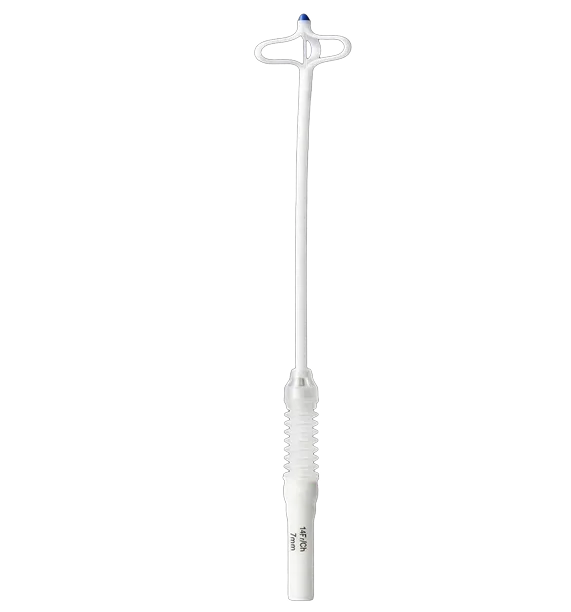
Lotus Catheter with its wings deployed

Same insertion technique

Clinicians insert Lotus using the same procedure as a Foley. Wings deploy automatically once inside the bladder. No additional training or equipment required.

HRRPHACRPCAUTI reporting

Cost-neutral to cost-positive

Priced to compete with standard Foleys. Designed to fit within existing CMS quality-program frameworks (HRRP, HACRP, CAUTI reporting) and support lower total cost of care.

  • K191512FDA 510(k)
  • Class IIMedical device
  • 2045Patent protected through
  • ISO 13485Certified manufacturing
  • 500K+Units globally
  • 51702CPT billing code

Regulatory & manufacturing

FDA 510(k) cleared (K191512), Class II medical device, patent protected through 2045, ISO 13485 certified manufacturing, 500K+ units globally.

Independent Research

What the literature says

Researchers have identified the balloon as a structural root cause of catheter-associated complications for decades, but until Lotus, no commercially viable alternative existed.

All references
01

“The mechanism of retention is arguably the pivotal aspect of design development.”

Feneley RCL, Hopley IB, Wells PNT. Journal of Medical Engineering & Technology, 2015.

The same research agenda proposes a catheter “retained by wings which spring open after insertion” (Figure 7), anticipating the wing-retention design Lotus has since commercialized. The authors estimated that even 50% of a better catheter's potential would save approximately $18 billion annually in the U.S.

Lotus Catheter wings open, folding and collapsed
$18BEstimated annual U.S. savings at 50% of a better catheter's potential
Read more
02

Biopsy-confirmed tissue damage within 6 hours

The Foley catheter tip (2.5–3 cm) pressing into the bladder dome produces acute and chronic inflammatory changes at the cellular level within 6 hours of insertion, demonstrated by biopsy-confirmed studies. Lotus reduces proximal tip to 4.5–6.5 mm, designed to minimize sustained dome contact.

Catheter tip length
Foley2.5–3 cm
Lotus4.5–6.5 mm
6 hInflammatory changes at the bladder dome, confirmed by biopsy
Read more
03

CMS non-reimbursement as a design forcing function

Since 2008, CMS has refused to reimburse hospitals for CAUTI treatment costs, classifying them as a preventable “never event.” This created a direct financial incentive to move beyond the Foley, yet the industry offered no viable structural alternative until Lotus.

CMS
2008CAUTI treatment costs classified as a preventable “never event”
Read more
References

Full reference list

  1. Saint S, Trautner BW, Fowler KE, et al. A Multicenter Study of Patient-Reported Infectious and Noninfectious Complications Associated With Indwelling Urethral Catheters. JAMA Intern Med. 2018;178(8):1078-1085.
  2. Centers for Disease Control and Prevention. Catheter-Associated Urinary Tract Infections (CAUTI), Background. cdc.gov
  3. Ito F, Greenberg AM. A pilot study comparing Foley catheter and CystoSure catheter balloon volumes and pullout forces in female cadavers. Arch Urol. 2018.
  4. Lotus 510(k) Section 18: Bench Testing, ASTM F623-2013, load test specification = 1 lb.
  5. Wu AK, Blaschko SD, Garcia M, et al. Defining the optimal bladder volume for catheter removal after catheterization. BJU Int. 2012;109:1110-1114.
  6. CMS Hospital-Acquired Condition (HAC) Reduction Program. 42 CFR §412.172.
  7. Feneley RCL, Hopley IB, Wells PNT. Urinary catheters: history, current status, adverse events and research agenda. J Med Eng Technol. 2015;39(8):459–470.
  8. Awad MA, Osterberg EC, Chang H, et al. Urethral catheters and medical malpractice: a legal database review from 1965 to 2015. Transl Androl Urol. 2016;5(5):762-773.
  9. Hooton TM, Bradley SF, Cardenas DD, et al. Diagnosis, Prevention, and Treatment of CAUTI in Adults: 2009 International Clinical Practice Guidelines. Clin Infect Dis. 2010;50(5):625–663.
  10. Pickard R, Lam T, MacLennan G, et al. Antimicrobial catheters for reduction of symptomatic urinary tract infection in adults requiring short-term catheterisation in hospital: a multicentre randomised controlled trial. Lancet. 2012;380(9857):1927-1935.
  11. Mohanty NK, Jha AK, Sharma SK, et al. Mitochondrial DNA induces Foley catheter related bladder inflammation via Toll-like receptor 9 activation. Sci Rep. 2018;8:6738.
  12. Barchitta M, Maugeri A, Favara G, et al. Catheter-Associated Urinary Infections and Consequences of Using Coated versus Non-Coated Urethral Catheters, Outcomes of a Systematic Review and Meta-Analysis of Randomized Trials. J Clin Med. 2022;11(15):4463.
  13. Judy BF, Kessler S, Gelman S, et al. Descriptive analysis of healthcare resource utilization and costs associated with treatment of urinary tract infections in United States hospitals. Am J Infect Control. 2022;50(2):190-198.
  14. All clinical data points are cited inline with references linking to original sources where publicly available. A complete reference list with full-text links is available upon request — contact team@lotuscatheter.com.

Lockhart J, Boyle A, Kidd LC, et al. The Lotus Catheter: a Non-Balloon Novel Urethral Catheter, a Prospective Study. J Urol Ren Dis. 2017;125.